
-
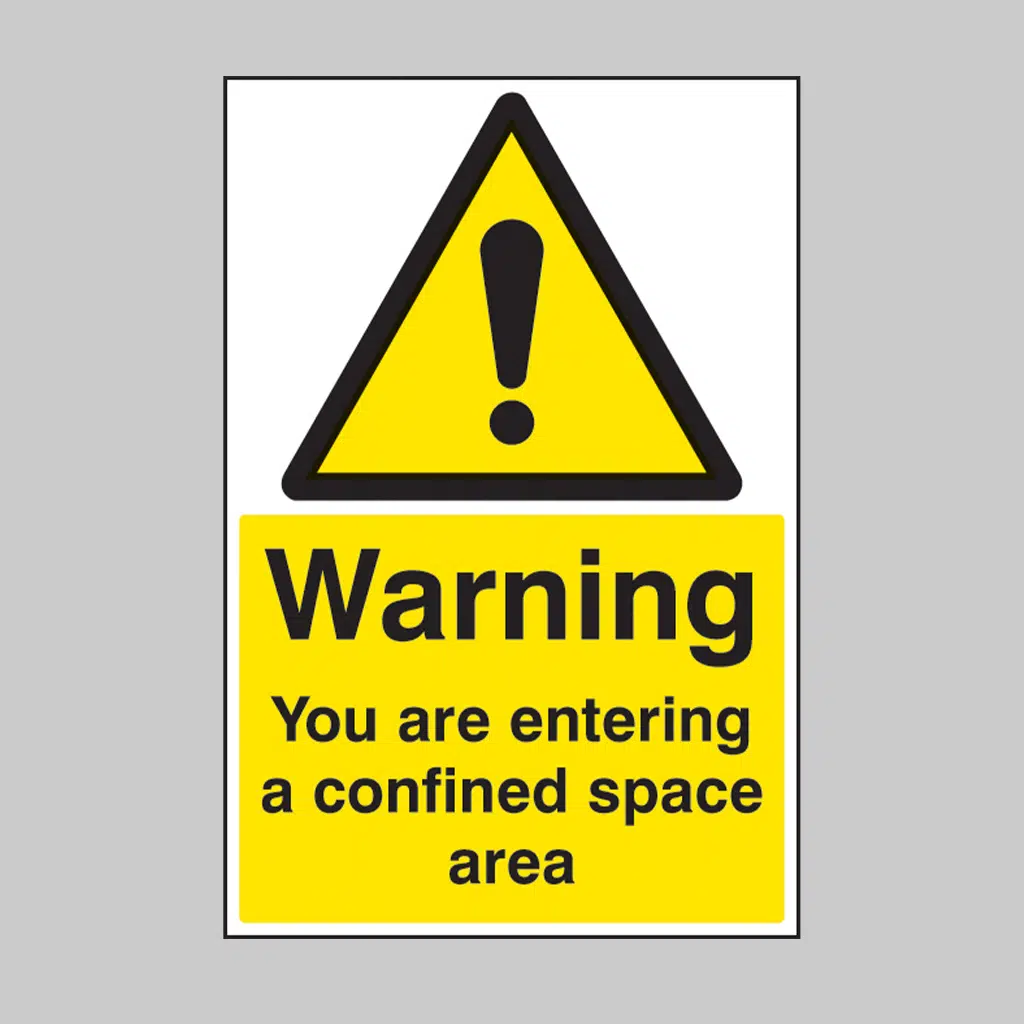
Warning you are entering a confined space area
From £10.17 Ex. VAT Select options This product has multiple variants. The options may be chosen on the product page
Construction warning signs help highlight hazards and activities that require particular care on active building, civil engineering and maintenance sites. This category brings together signs for temporary and ongoing site conditions, helping workers, contractors and visitors recognise specific risks before entering or moving through an affected area.
The range includes warnings for heavy plant and machinery, construction work in progress, site traffic, lorries and vehicles reversing, as well as overhead cranes, overhead loads and people working above or below. These signs are particularly useful around access routes, lifting areas and locations where vehicle or plant movements could create additional risks.
Specific products cover lifting operations, suspended loads, high-pressure water jetting, welding and demolition work, together with warnings for incomplete scaffolding and unsafe structures. There are also signs for open manholes, deep excavations, sudden drops, fragile roofs and other changing site conditions where a clearly positioned warning can draw attention to a particular hazard.
For more specialist working environments, the collection includes confined-space warnings, vibration-risk notices, acetylene warnings, test-area signage and exclusion-zone messages. Additional options include reflective Re-Flex construction-traffic signage and large roll-top formats for situations where prominent, highly visible communication is required.
The broad range of messages makes these products suitable for construction sites, demolition areas, refurbishment projects, road and infrastructure works, plant areas and other locations where site conditions can change throughout the working day. Selecting a sign that accurately reflects the hazard or activity helps communicate the relevant risk at the point where people encounter it.
When choosing a construction warning sign, consider the specific hazard being communicated, the viewing distance, the position of the sign and whether a standard, reflective or larger-format product is most appropriate. Clear, correctly positioned warnings can help workers and visitors recognise changing site conditions and take appropriate care.